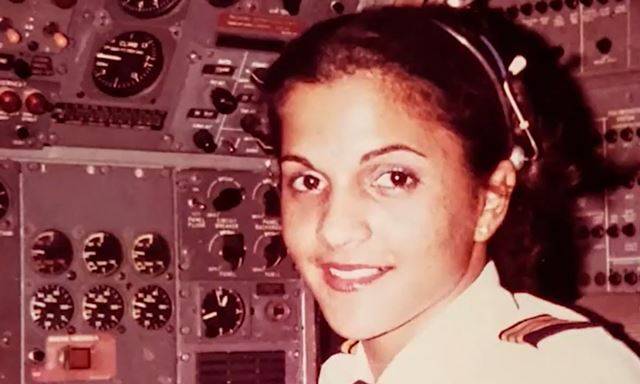
When Maria Ziadie-Haddad joined Air Jamaica as a flight attendant in the 1970s, becoming one of the airline’s pilots was not an obvious next step. There were no women in its cockpits and, as she began learning to fly, she says she was told plainly that Air Jamaica did not hire female pilots.
She kept flying anyway.
Ziadie-Haddad would go on to become Air Jamaica’s first female pilot and one of the first female commercial jet airline pilots in the Western Hemisphere, continuing a legacy established by pioneering Jamaican women before her and helping to widen the path for those who followed.
But she is emphatic that she did not get there alone. “It was not by myself at all,” she told Jamaicans.com.
Behind that achievement were family members who sacrificed to help her pursue what once seemed like a distant dream, friends and colleagues who encouraged her determination and pushed her to keep training and reaching higher, and even people she barely knew who intervened and advocated on her behalf.
Their roles are as much a part of Ziadie-Haddad’s story as the barriers she broke and the women she would go on to inspire.
An Early Fascination with Flying
Born in Montego Bay, Ziadie-Haddad became fascinated with flying as a child.
Her mother noticed her constant questions about aeroplanes, airports and clouds and, when she was about six or seven, arranged for her and her sister to fly with family friend Ken Rutter.
A former Czech Air Force pilot who established flying schools in Montego Bay and Kingston, Rutter took the girls up in a four-seater aircraft over the Cockpit Country.
Ziadie-Haddad was thrilled, but becoming a pilot was not yet something she imagined for herself. At the time, women simply were not commonly seen in airline cockpits.
She initially considered medicine and later studied social sciences in Canada before returning to Jamaica. When Air Jamaica advertised for flight attendants, she applied and was accepted.
It was during her flight attendant training that her dram of flying began to take shape.
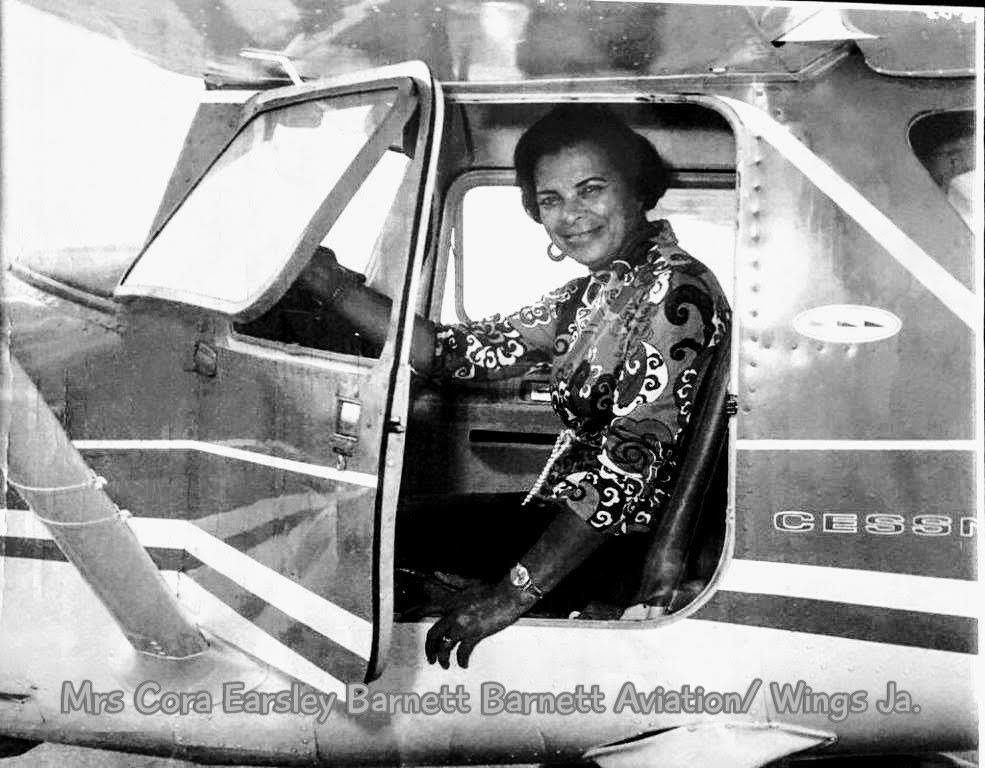
Ziadie-Haddad mentioned to instructor Yvonne Earl that she wanted to learn to fly as a hobby. Earl directed her to Wings Jamaica Ltd. at Tinson Pen, the flying school associated with Carl and Cora Barnett.
Cora Barnett was already a pioneer. Ziadie-Haddad recalls learning that she was Jamaica’s first licensed female pilot and had helped train many of the Jamaican pilots who would later fly for Air Jamaica.
Ziadie-Haddad went to Tinson Pen hoping to meet her, but Barnett died that same week. “She’s a true pioneer of Jamaican aviation,” Ziadie-Haddad said. “We don’t hear about her anymore.”
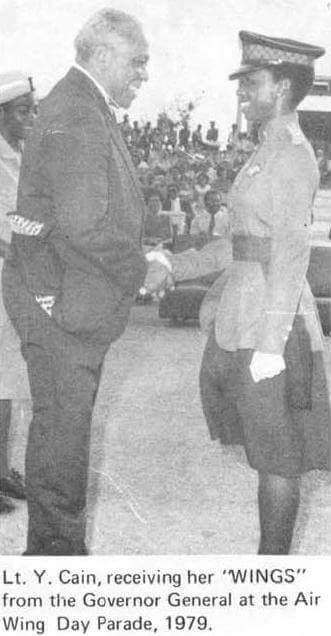
She also remembers Yola Cain, who was making her own mark as the first woman to fly with the Jamaica Defence Force Air Wing.
Women were flying, but Air Jamaica presented another challenge. The airline had never hired a female pilot, and Ziadie-Haddad had been told that it had no intention of doing so. “I was also told that they would not hire female pilots at Air Jamaica,” she recalled.
Beverley Manley’s Intervention
Despite that reality, Ziadie-Haddad began taking lessons at Tinson Pen and earned her private pilot licence. Air Jamaica pilots Robin Hart and Marco Moret encouraged her to go further, earn her commercial qualification and become a flight instructor like Cora Barnett.
Money became the next obstacle. Ziadie-Haddad said the Students’ Loan Bureau repeatedly refused to finance her training.
“We don’t give loans to women pilots ’cause we don’t have any,” she recalled being told.
Her mother recognised the discrimination and took the matter to the Women’s Bureau, which led them to Beverley Manley, then Jamaica’s First Lady and a prominent advocate for women’s rights.
After reviewing Ziadie-Haddad’s qualifications, Manley called the Students’ Loan Bureau and challenged its position, pointing to Jamaica’s membership in the International Labour Organization.
“You should give this person a chance,” Ziadie-Haddad recalled Manley saying. “We are members of the International Labor Organization. You can’t discriminate like that and say that we don’t give to women.”
Ziadie-Haddad was granted an interview with the board. Armed with newspaper clippings about Cora Barnett and women flying commercially overseas, along with an essay making her case, she got the loan.
She completed her commercial flight training in Florida and returned to Jamaica, where she became an instructor while continuing to work as an Air Jamaica flight attendant.
Her grandfather then made another sacrifice. Rather than see her spend years repaying the loan, he used his life savings to clear the debt.
“They saw the dream,” Ziadie-Haddad said of her mother and grandfather.
Finally Taking Flight
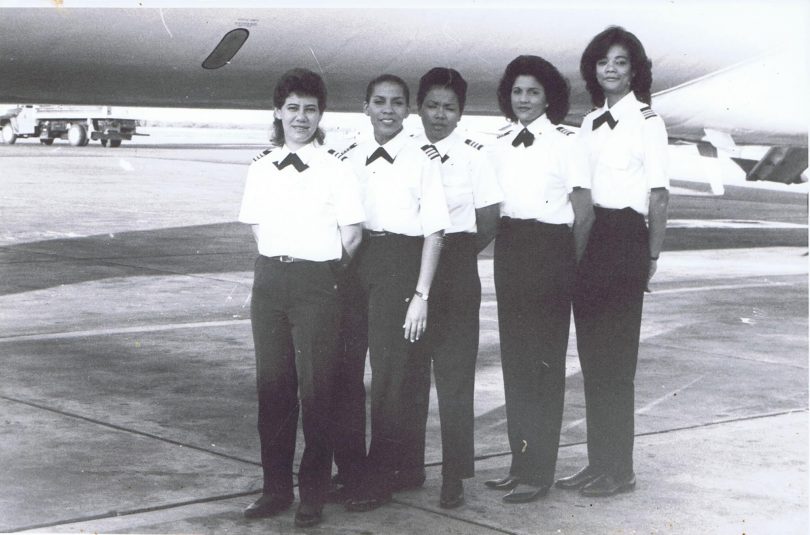
The breakthrough came when Air Jamaica recruited a group of nine pilots, with Ziadie-Haddad among them as the airline’s first female pilot.
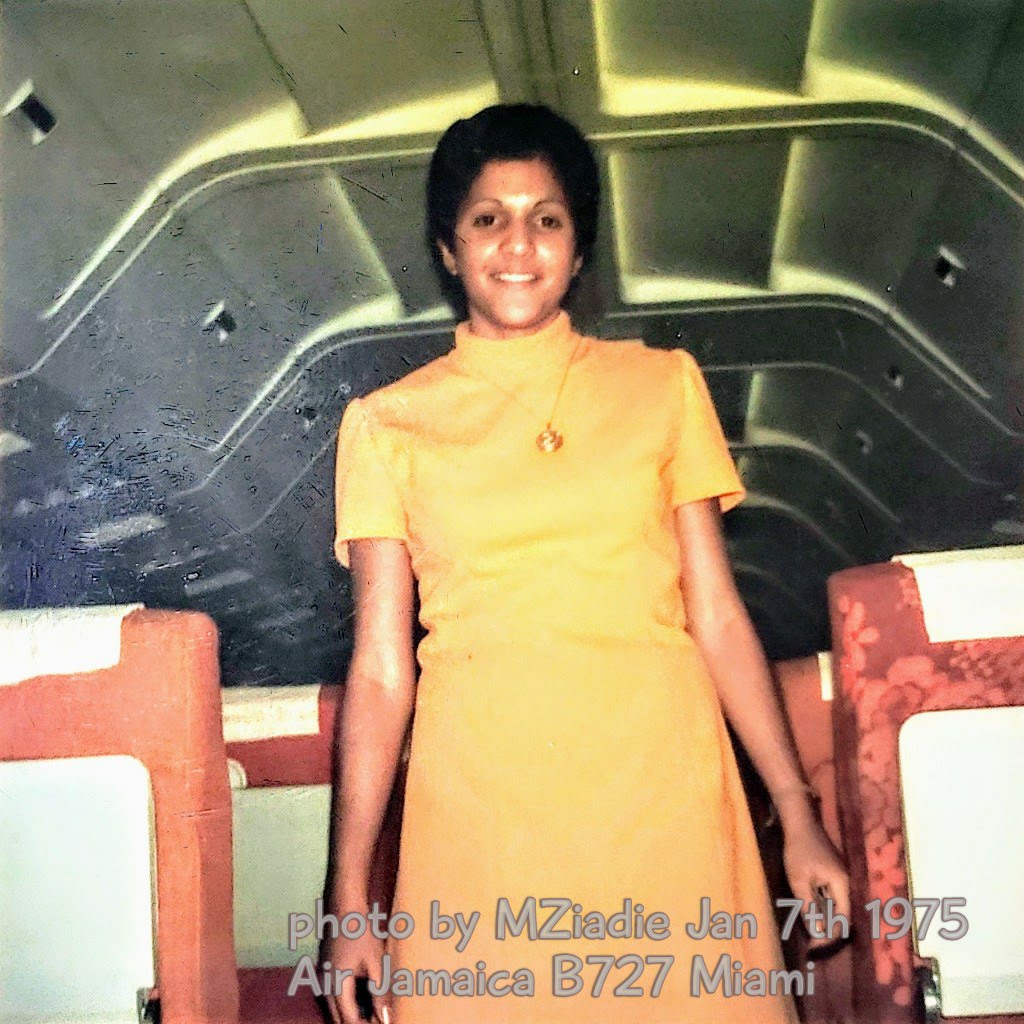
Fittingly, she began on the Boeing 727, the same aircraft on which she had first served as a flight attendant.
“That was the first jet I served on as a flight attendant,” she said, “and that was the first airplane I entered as a pilot with Air Jamaica.”
She would eventually fly the aircraft as second officer, first officer and captain, becoming Air Jamaica’s first female captain. Along the way, she said colleagues across the airline supported her progression.
“They knew I was persisting, so they supported me.”
Among her most memorable milestones was commanding Air Jamaica’s first all-female flight from Kingston to Fort Lauderdale, with Debbie McMaster alongside her in the cockpit and an all-female cabin crew.
Her influence also extended beyond the cockpit. Ziadie-Haddad served as vice president of the International Society of Women Airline Pilots from 1984 to 1986 and became active in the Jamaican Airline Pilots Association (JALPA), representing Jamaican pilots internationally before serving as JALPA president from 1999 to 2001.
“The job I had with Air Jamaica opened up doorways,” she said.
Opening Doors for Other Women
By breaking through the glass ceiling to become a pilot, rising to captain and later becoming the first woman to lead JALPA, Ziadie-Haddad inevitably became an example for other women to dream bigger and see that, quite literally, the sky was the limit.
Some later told her directly that seeing her make that journey had helped them believe they could do it too.
“There are a few Air Jamaica pilots that have definitely said to me, ‘Hey, this really helped,’” Ziadie-Haddad recalled.
That impact can perhaps be seen most clearly in the women who followed her into Air Jamaica’s cockpit and became aviation pioneers in their own right, building distinguished careers that extended beyond Air Jamaica. Among them were Captain Marlene Smith, who later flew for Spirit Airlines; Captian Lisa Elliott, who became a captain with Caribbean Airlines; Debbie Bailey McMaster; and Helen Otway-Gooden.
But Ziadie-Haddad is equally conscious of the women who helped make her own journey possible. Pioneers such as Cora Barnett and Yola Cain had already challenged expectations of what Jamaican women could do in aviation.
In that sense, Ziadie-Haddad is both a pioneer and a continuation of their legacy. She carried their progress further, then helped widen the path for the women who followed her, ensuring that their contributions, too, remain part of the story of Jamaican women in aviation.