
Bob Marley Would Have Been At Obama’s Inauguration!
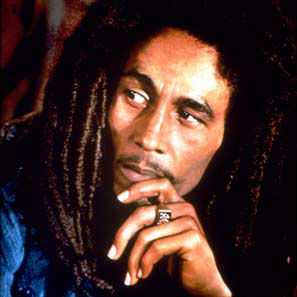
Marley Was Missed! Bob Marley Would Have Been At Obama’s Inauguration! Marley would have been there! I KNOW Marley would have been there! Those words were stuck in my head as I watched “We Are One: The Obama Inaugural Celebration at the Lincoln Memorial” Sunday, January 18 as televised on HBO from the Lincoln Memorial […]
Women and the Fear of Commitment
Unbeknownst to many, women fear commitment just as men do, maybe worse. There is a misconception that women desperately want to be married and therefore is constantly on a witch-hunt to find the perfect husband. And because of the misconception that it is men who are the commitment-phoebes, these men tend to have to be dragged down […]
How To Get HIM To Change
Ladies, how many times have you said that the man in your life won’t change? Or, how many times have you said that he still has some issues to work out? Do you often find yourself complaining about his reluctance to behave in a way that would make you happy? I know he has a problem. He doesn’t know […]
Reflection on President Obama’s Message as it Pertains To Food
A key principle that Barack Obama used as part of the foundation of his campaign, was that we are not White America, Black America, Latino America, or Asian America – we are the United States of America. With that in mind, it brought me back to thinking about my fellow Caribbean nationals living in the […]
Interview with Jamaican Ski team member Errol Kerr
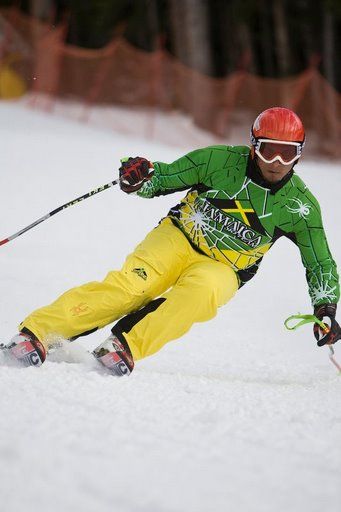
Meet 22 year old Errol Kerr a founding member of the Jamaica Ski Team. Born in Brooklyn he holds dual citizenship courtesy of his Jamaican father and American mother. He will be representing Jamaica in the 2010 Winter Olympics. His dream is to win a Winter Olympic gold for Jamaica and inspire Jamaican kids to ski. […]
Jamaican in DC for the Presidential Inauguration of Barack Obama
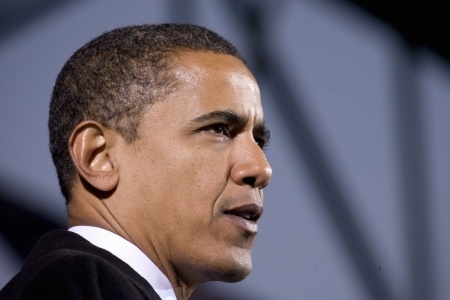
For my husband, two daughters, the in-laws and I, our days flowed into one from Friday, January 16th to Wednesday January 21, as we prepare in anticipation for our new president, Barack Obama. These days, we have marked as the five most important days of our lives as black people in America. When I received […]
Dual Citizenship and the Global Economy
I read an article in the Carib News 12/16/08 “Caribbean Politics Grapples with Dual Citizenship”. The author points out that this has been a major discussion for the past two years in several Caribbean islands. My name is Daseta Gray. I currently reside in New York City and I have been living here for […]
Stimulus and Green Jobs for Jamaican Graduates
In the overall mix of Global economic woes; Jamaica’s short-term economic recovery prospects looks great with the recent approval of US$ 100 million (J$ 8 billion) Sustainability Development Policy loan from the World Bank, to help in Jamaica’s fiscal management, and Prime Minister Bruce Golding’s billion dollar Stimulus Package. One must applaud Finance Minister Audley […]
New Year, New President and Possibly New Immigration Reform?
Happy New Year to everyone! I trust you all had a wonderful holiday. The year of 2008 was filled with countless historical milestones. On a personal note, my husband and I welcomed the birth of our first child, Olivia Simone Byars. However, the most historical milestone for the United States was the election of President-Elect, Barack Obama. President Barack Obama […]
St. Martin (Marteen)
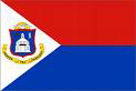
Country Overview: Although sighted by Christopher COLUMBUS in 1493 and claimed for Spain, it was the Dutch who occupied the island in 1631 and set about exploiting its salt deposits. The Spanish retook the island in 1633, but continued to be harassed by the Dutch. The Spanish finally relinquished St. Martin to the French and […]