Nearly four decades before three researchers received one of the world’s largest education prizes, they were working with undernourished young children and their families in Jamaica, testing what was then a relatively simple idea: could helping parents play, talk and interact more with their children change the course of those children’s lives?
Decades later, they had their answer.
Research that began at The University of the West Indies (UWI) in Jamaica in the 1980s would eventually help reshape global thinking about early childhood development in disadvantaged communities and provide the foundation for an intervention that has since reached families across Latin America, the Caribbean, Africa, Asia and the Middle East.
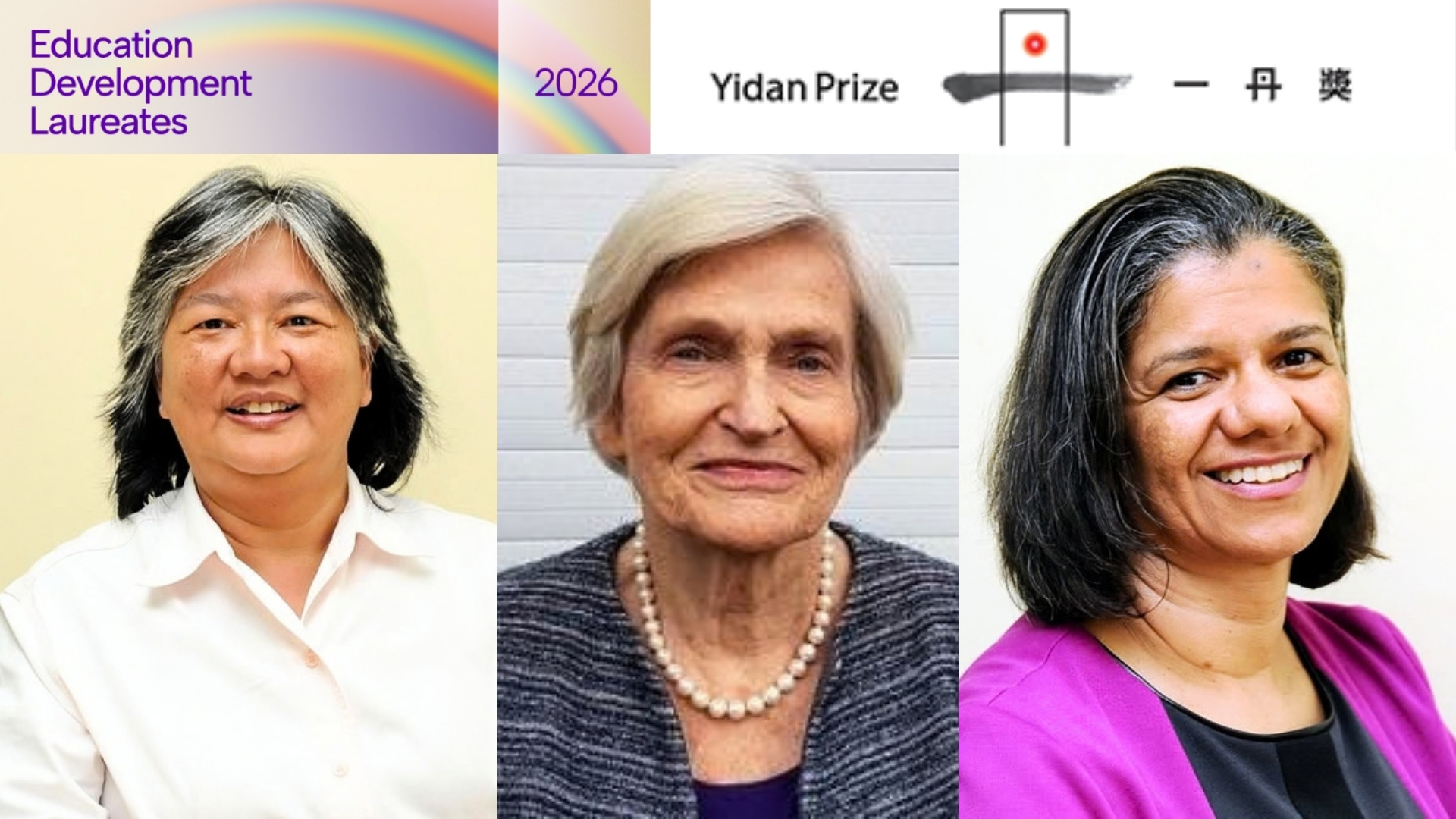
Now, that body of work has earned Professor Susan P. Walker, Dr. Susan M. Chang-Lopez and Professor Sally Grantham-McGregor the 2026 Yidan Prize for Education Development, one of the world’s most prestigious education honours. Established by the Yidan Prize Foundation, the annual award recognises individuals and teams whose work is transforming education, with separate prizes for Education Research and Education Development.
But to understand why this work now commands one of education’s biggest honours, it is worth going back to where it started.
Testing Nutrition and Early Stimulation
In the 1980s, undernutrition remained a significant problem among children in Jamaica. Researchers at UWI’s Tropical Metabolism Research Unit were studying how it affected children’s development and, more importantly, what could be done about it.
Professor Walker and Professor Chang-Lopez joined a team led by Professor Grantham-McGregor that was examining children who had experienced undernutrition.
The researchers tested two interventions. Some families received additional nutrition, while others received support designed to help caregivers better promote their children’s development through everyday interaction.
That meant something surprisingly simple: showing caregivers how to play with their children, talk to them, respond to them and create opportunities for learning at home.
Both approaches worked.
Providing additional food improved children’s development. But the caregiver intervention produced an important finding of its own.
“What we found was that both of the interventions worked,” Walker explained during a recent interview on TVJ’s Smile Jamaica.
She said the research showed that working with caregivers and helping them learn how to “interact and play and speak and chat” with their children could also improve their development.
At the time, Walker said, it was the first time this had been demonstrated in that way in a low-income country.
But perhaps the most consequential part of the research was still to come.
What Happened When the Children Grew Up?
The researchers continued following the children long after the original two-year study ended, allowing them to examine whether the benefits of early childhood stimulation would last into adulthood.
What they discovered was remarkable.
By age 22, participants who had received the stimulation intervention were earning approximately 25 per cent more than those who had not. When researchers followed up again around age 31, the difference was even greater, with their hourly wages 43 per cent higher and overall earnings 37 per cent higher.
The benefits extended beyond income. Follow-up studies found that participants who received the intervention had higher IQ scores, greater cognitive flexibility, fewer depressive symptoms and stronger personal attributes such as perseverance and conscientiousness.
These were substantial differences for children who had begun life facing significant disadvantages associated with poverty and undernutrition. The findings demonstrated that relatively inexpensive interventions during the earliest years of life could have lasting effects on educational achievement, mental health and economic opportunities decades later.
For Walker, the research has always been about addressing inequalities that begin much earlier than many people realise.
“What it really was about was trying to reduce the inequality that poverty [creates],” she told Smile Jamaica. “It starts really early in life.”
The significance of the Jamaican study extended beyond the lives of its participants. It provided rare long-term evidence from a developing country that investing in early childhood development could help reduce the disadvantages associated with poverty, strengthening the case for governments and policymakers to invest in programmes supporting children and their caregivers.
Meet the team from the Tropical Medicine Research Institute at @UWImona behind the #ReachUp programme https://t.co/0RMO6m2uCs
— ReachUp (@reachupandlearn) October 20, 2015
Reach Up Early Childhood Programme
What began as research in Jamaica did not remain here.
The lessons from those early studies eventually helped form the basis for Reach Up, an early childhood parenting programme that has since been implemented or adapted across 21 low- and middle-income countries in Latin America and the Caribbean, Africa, Asia and the Middle East.
Chang-Lopez has travelled extensively to train teams implementing the programme, often in some of the poorest communities. Despite differences in language, geography and culture, she said many families face similar challenges in bonding, communicating and engaging with their children.
The programme is adapted to each setting, incorporating local songs, games, materials and routines while retaining the principles established through the original Jamaican research. In Brazil alone, it is being scaled to reach approximately 1.5 million children.
That ability to turn research into practical change is also central to why Walker, Chang-Lopez and Grantham-McGregor received the Yidan Prize for Education Development.
“We are researchers, but we’ve always been interested and made an effort to engage with practitioners [and] policymakers,” Walker explained.
The goal, she said, was to ensure their findings did not remain research alone, but actually benefited children’s lives.
Today, Reach Up is also being scaled in Jamaica through the Ministry of Health and Wellness, bringing a programme born from Jamaican research back into communities at home while its influence continues to spread around the world.
US$3.8 Million to Write the Next Chapter
The Yidan Prize comes with HK$30 million, approximately US$3.8 million, including unrestricted project funding that will allow the researchers to continue developing and expanding their work.
For researchers accustomed to writing grant applications around the priorities of funding agencies, that freedom is significant.
“It’s really liberating,” Walker said.
The team plans to use the funding to support Reach Up’s expansion in Jamaica, extend the programme to more countries and strengthen the global network of researchers and practitioners working in early childhood development.
One of those next destinations is Haiti.
Walker said the team had never worked there before, something that had concerned them given the scale of the need. They are now beginning a study in collaboration with the Inter-American Development Bank, with the Yidan Prize providing an opportunity to extend that work.
It is a future Walker and Chang-Lopez could hardly have imagined when they joined the research team in the 1980s.
“I couldn’t have imagined at that stage that we’d be here today,” Walker reflected.
Nearly four decades later, the work that began with Jamaican children and their caregivers has travelled around the world, while continuing to reinforce the discovery at its heart: that what happens in the earliest years of a child’s life can help shape what becomes possible decades later.
Now, with one of education’s biggest prizes behind them, the researchers have the resources to find out how many more lives that idea can change.