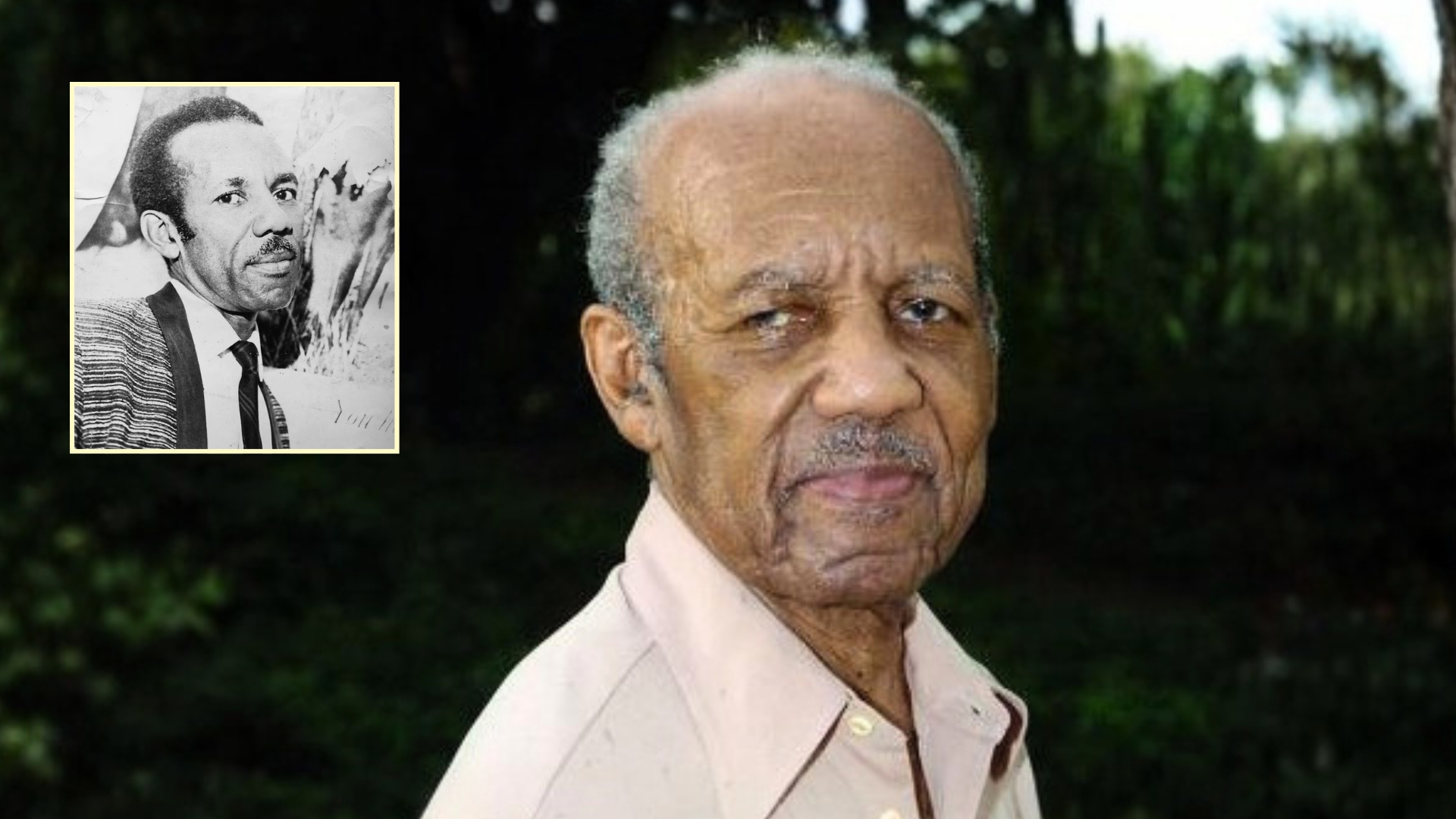
Long before Jamaica’s sound system culture revolutionised popular music, Hedley H.G. Jones was building the technology that helped make it possible.
A gifted musician, pioneering inventor and electronics genius, Jones built one of Jamaica’s earliest solid-body electric guitars, developed groundbreaking audio amplifiers and helped lay the foundation for a musical movement that would influence reggae, dancehall, hip-hop and the world.
A Curious Young Inventor
Born on November 12th, 1917, in Wakefield, St. Catherine, to David and Hettie Jones, Hedley developed an early fascination with music and electronics. Taught to sing by his parents, he began making his own instruments as a child, including a ukulele, banjo and cello.
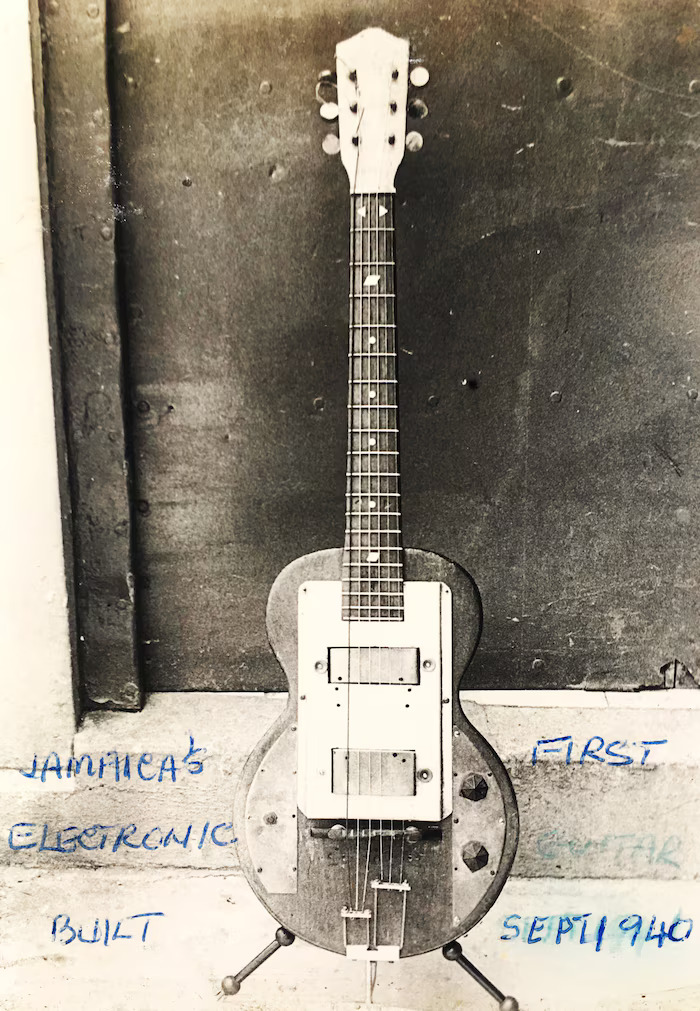
In 1940, aged just 22, Jones built his own solid-body electric guitar, using horseshoe magnets and stove bolts to construct its electromagnetic pickup. His invention was featured in the September 2nd, 1940 edition of The Daily Gleaner, in a newspaper clipping later reproduced by music historian Heather Augustyn. He subsequently built and modified electric guitars and amplifiers for Jamaican musicians, including legendary guitarist Ernest Ranglin.
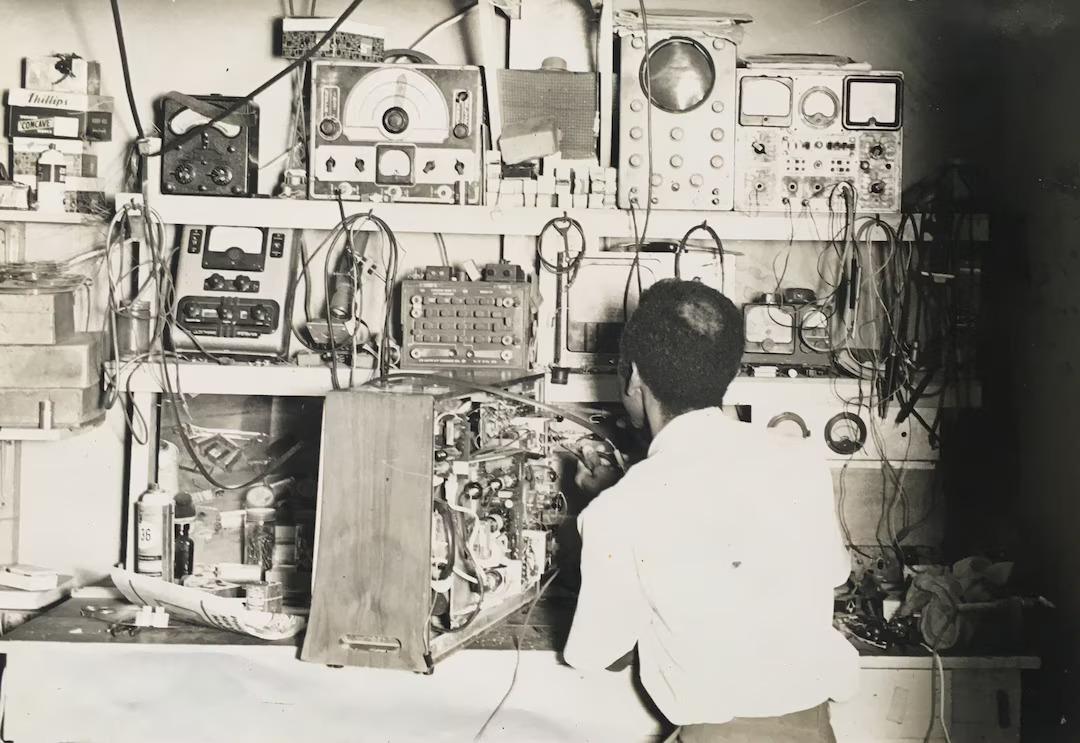
During the Second World War, Jones served in the Royal Air Force, receiving specialist training in radio and radar engineering in Britain. Returning to Jamaica in 1946, he used a £50 rehabilitation loan to help establish an electronics repair business in downtown Kingston. He later added a record department called Bop City, selling imported recordings and setting the stage for his most influential invention.
The Invention That Changed Jamaican Music
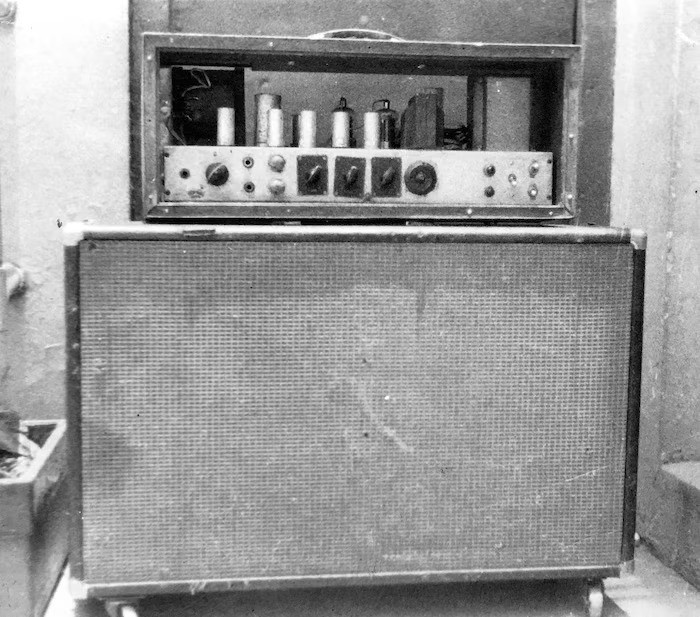
In 1947, Jones built a high-fidelity amplifier to demonstrate records to customers, producing richer, more powerful sound than the conventional public address systems commonly used at Jamaican dances.
A 2019 Red Bull Music Academy feature documenting Jones’s life and legacy recounts how he was playing records by Cuban bandleader Pérez Prado outside his Kingston shop when the music began drawing a crowd. Unbeknownst to him, businessman Tom Wong was operating a dance across the street at Jubilee Tile Gardens. Jones’s superior sound attracted so much attention that Wong’s event suffered.
The following Monday, Wong arrived at Jones’s shop with money to commission an amplifier of his own. Within two weeks, Jones had transformed Wong’s equipment, helping establish Tom the Great Sebastian, one of Jamaica’s earliest and most influential sound systems.
Jones’s engineering expertise soon attracted other pioneering sound system operators, including Duke Reid and Clement “Coxsone” Dodd. He also contributed to the technical development of Coxsone Dodd’s legendary Studio One recording facility.
His innovations helped lay the technological foundation for Jamaica’s sound system culture, which would become instrumental in the development of ska, rocksteady, reggae and dancehall, and eventually influence hip-hop and popular music around the world.
A Genius Inventor
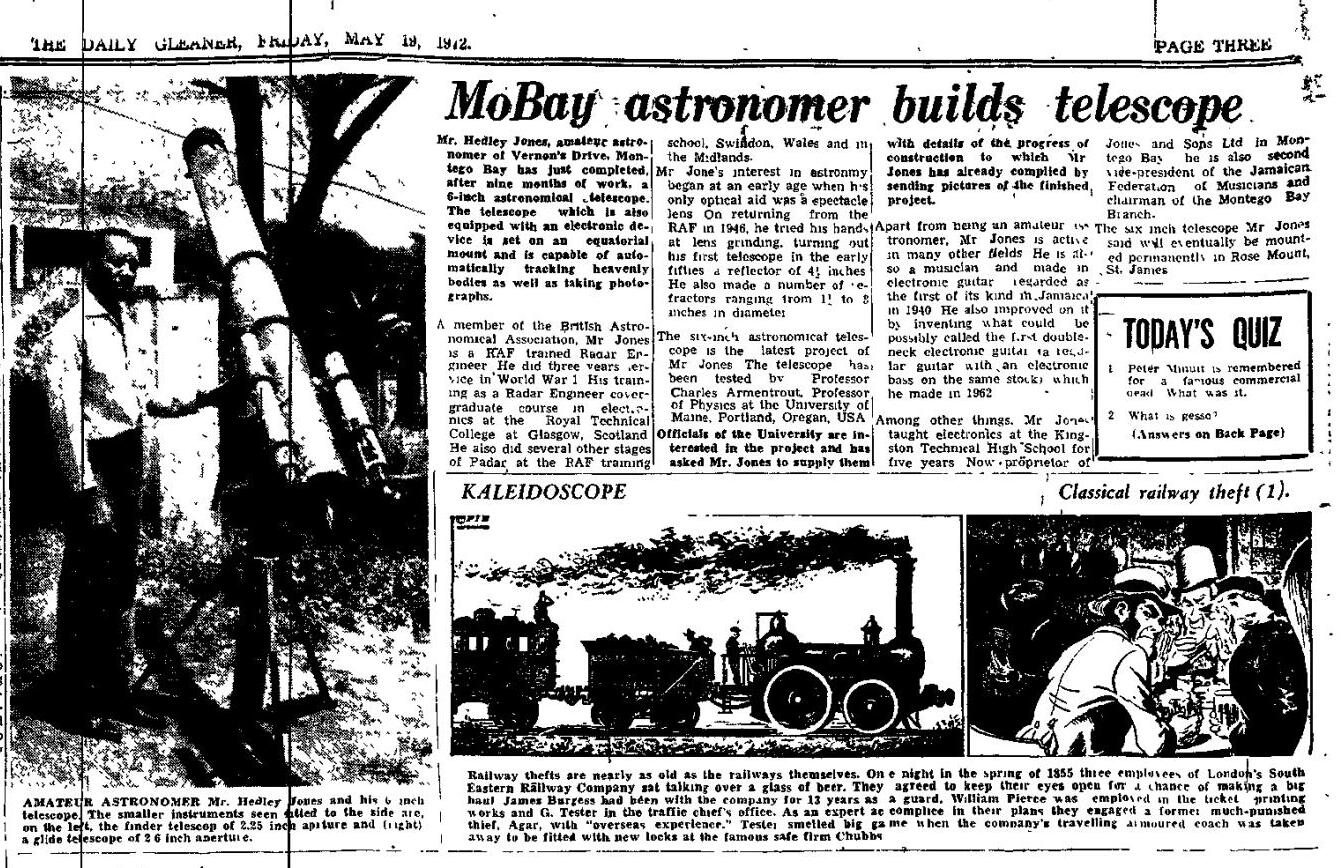
Jones’s inventive mind extended well beyond music and audio equipment. In 1952, he and his cousin Stephen developed an early traffic light system in Jamaica. He also had a lifelong fascination with astronomy, building his own telescopes and even grinding and polishing their mirrors himself. His astronomical pursuits were featured in a May 19th, 1972 Daily Gleaner article titled “MoBay Astronomer Builds Telescope”. In 1985, he used his telescope to observe Halley’s Comet.
An accomplished musician and bandleader, Jones also enjoyed a long career performing in Jamaica’s tourism industry. He led the Hedley Jones Quintet, entertaining guests at hotels and other venues, particularly in Montego Bay. His musical talents and technical expertise made him an important figure both onstage and behind the scenes of Jamaica’s entertainment industry.
Beyond performing, Jones advocated for the rights and welfare of Jamaican musicians, serving as president of the Jamaica Federation of Musicians, now the Jamaica Federation of Musicians and Affiliates Union, from 1985 to 1995.
He was equally committed to sharing his technical knowledge. Between 1959 and 1964, Jones taught electronics at Kingston Technical High School, helping to train a new generation of Jamaican engineers and technicians.
His achievements earned him several honours, including Jamaica’s Order of Distinction, the Gold Musgrave Medal in 2011 and a 2014 Lifetime Achievement Award from the Jamaica Reggae Industry Association. Jones died on September 1st, 2017, aged 99.
A legacy of Jamaican Ingenuity
In a September 2nd, 1940 interview with The Daily Gleaner, a 22-year-old Jones expressed concern about the lack of support for young Jamaican inventors. As documented in music historian Heather Augustyn’s 2014 feature on Jones, he lamented:
“It’s a pity that a few of our talented young men have not the ‘push’ to make ourselves of some benefit to this our island.”
More than eight decades later, those words offer a powerful perspective on Jones’s extraordinary life. Despite the limitations he recognised as a young inventor, he went on to demonstrate just how much Jamaican ingenuity could contribute, not only to the island but to the world.
On the 109th anniversary of his birth, we celebrate Hedley Jones, a pioneering inventor, amateur astrologer, accomplished musician and giant of electronics. From a homemade electric guitar to the amplifiers that helped launch Jamaica’s sound system revolution, his inventions became part of the foundation of a musical legacy that continues to resonate across generations and continents.
Hedley Jones Deep dive
There’s much more to discover about this remarkable Jamaican pioneer. Take a deeper dive into Hedley Jones’s life, groundbreaking inventions and lasting contributions to Jamaican music through these articles and historical resources.
- Hedley Jones: The Renaissance Man Who Pioneered Jamaican Soundsystem Culture — Red Bull Music Academy — Seb Carayol’s extensive feature featuring Jones’s recollections, family interviews and archival photographs.
- Pioneer Hedley Jones — Heather Augustyn — Historical newspaper clippings and Jones’s own detailed account of his inventions and engineering career.
- Jamaica Is Where Sound Systems Begin: Enter Hedley Jones — Sonic Street Technologies — Research into the technological origins of Jamaican sound system culture.
- Hedley Jones Receives Musgrave Honour — Jamaica Observer — Coverage of his 2011 Gold Musgrave Medal and recognition of his contributions.
- Hedley Jones (1917–2017) — Rock and Roll Paradise — A biographical account of his upbringing, family, musical career and inventions.