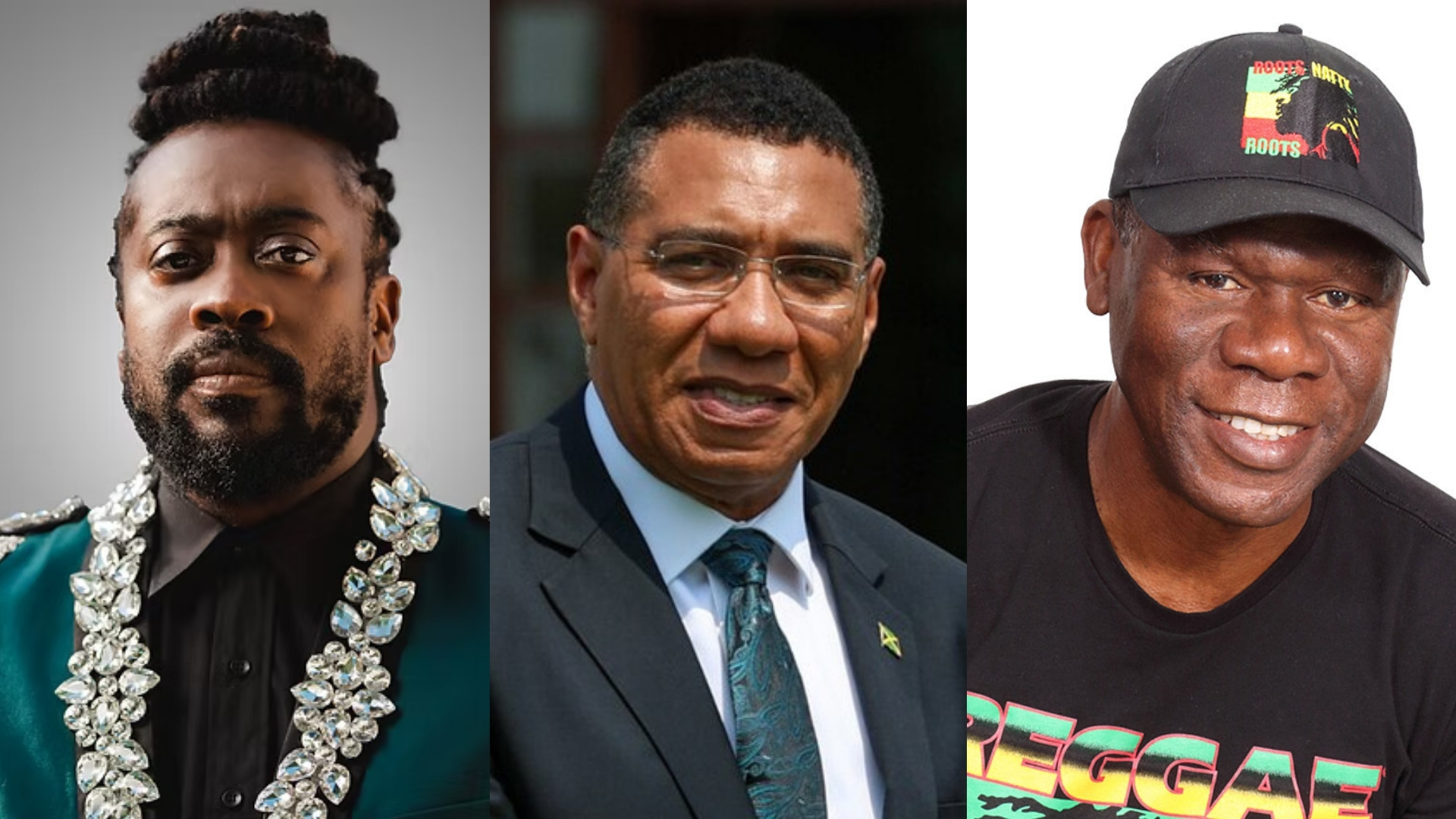
One year after Hurricane Melissa devastated western Jamaica, leaving communities struggling to rebuild and thousands of families facing an uncertain future, dancehall veteran Beenie Man has released a new song questioning the distribution of hurricane relief funds and calling for greater accountability in the recovery process.
Titled Weh Di Money Deh, the song was released on November 2nd, 2026, just days after Jamaica marked the first anniversary of the Category 5 hurricane, which made landfall on October 28th, 2025. The track draws attention to the plight of families still awaiting assistance, while urging national unity, political fairness and greater transparency about how recovery funds are being spent.
The release also follows a public exchange between Beenie Man, whose given name is Moses Davis, and Prime Minister Andrew Holness over the Government’s handling of hurricane relief. Beyond the political disagreement, however, the song raises questions about the progress of Jamaica’s recovery and the needs of those still living with the consequences of the disaster.
Western Jamaica Still Struggles to Recover
Hurricane Melissa was one of the most destructive natural disasters in Jamaica’s history. According to the United Nations, the storm claimed 45 lives, caused an estimated US$12 billion in damage and left widespread destruction across western Jamaica, particularly in St. Elizabeth, Westmoreland, St. James and Hanover.
Among the hardest hit was St. Elizabeth, widely regarded as Jamaica’s breadbasket parish because of its significant contribution to domestic food production. The hurricane devastated farms, destroyed crops and livestock, damaged agricultural infrastructure and disrupted the livelihoods of thousands of farmers. Preliminary Government assessments estimated agricultural losses nationwide at J$29.5 billion, affecting more than 70,000 farmers.
The consequences extended beyond farming communities. Disruptions to agricultural production and food supplies contributed to higher prices in markets across Jamaica, placing additional pressure on households already struggling with the cost of living. Although production has gradually resumed, the agricultural sector has not fully recovered from the devastation.
In Black River, St. Elizabeth’s capital, market vendors are still struggling to rebuild their livelihoods. An October 28th report by The Gleaner documented how traders lost their stock, equipment and stalls when Melissa destroyed the town’s market. A year later, some were still operating under difficult conditions, with inadequate shelter, reduced customer traffic and uncertainty surrounding the market’s reconstruction.
For some farmers, the assistance received has also fallen short of their recovery needs. In a Prime Time News segment, a farmer from Four Paths, St. Elizabeth, who had received a J$200,000 Government housing grant, argued that more should be done for those hardest hit. He pointed to the international support mobilised for Jamaica’s recovery and questioned whether enough was being done to assist affected communities.
The challenges extend beyond agriculture and commerce. According to the Office of Disaster Preparedness and Emergency Management (ODPEM), 136 people remained in 24 emergency shelters on the hurricane’s first anniversary, including 47 in Westmoreland and 44 in St James.
Education has also suffered. More than 600 schools were damaged by Melissa, and some students in western Jamaica have had to attend classes under trees or in makeshift structures while repairs continue. As of late October, the Government reported that 144 of 308 priority schools had been fully repaired, with further work ongoing.
In an October 28th statement, the United Nations acknowledged progress in restoring public services and delivering humanitarian assistance but warned that recovery needs in western Jamaica remained immense.
One year later, the emergency response has given way to a prolonged rebuilding effort, and for many families, farmers, vendors and schoolchildren, the effects of Melissa remain part of everyday life.
Beenie Man Questions Relief Distribution
Against this backdrop, Beenie Man’s Weh Di Money Deh questions the distribution of hurricane relief funds and whether assistance is reaching those who need it most.
Through the lyrics, Beenie Man highlights the plight of families still living under damaged roofs, struggling to secure building materials and waiting for assistance. He also calls for transparency and fairness in the distribution process, arguing that hurricane victims should receive help regardless of their political affiliation.
The song follows remarks he made during an interview with British broadcaster ITV News, in which he criticised the handling of hurricane relief assistance. His comments prompted a public response from Prime Minister Andrew Holness, who defended the Government’s recovery efforts and criticised statements he believed were damaging to Jamaica’s international reputation.
In a November 3rd interview with The Gleaner, Beenie Man explained that his original comments were spontaneous and motivated by concern for hurricane victims. He said the song was conceived afterwards, rather than being planned when he gave the interview.
His questions come amid wider controversy over the cost and management of Jamaica’s hurricane recovery. In October, the J$40 million annual basic salary of Major General Antony Anderson, chief executive officer of the National Reconstruction and Resilience Authority (NaRRA), attracted public criticism. His compensation package also includes a vehicle and a performance-related gratuity, although the Government has defended the remuneration as appropriate for the responsibilities of the position.
NaRRA also faced criticism over plans to lease office space in downtown Kingston at an initially reported cost of J$115 million annually, prompting the Government to scale back the arrangement. Separately, a May 2026 Auditor General’s report identified weaknesses in the financial management and oversight of hurricane relief funds, adding to concerns about transparency and accountability.
While these controversies do not establish wrongdoing, they have raised questions about spending priorities and oversight at a time when thousands of hurricane victims are still awaiting assistance.
Government Defends Hurricane Melissa Recovery Efforts
The Government, however, maintains that significant progress has been made, pointing to billions of dollars in expenditure and ongoing programmes to rebuild homes, restore infrastructure and support affected communities.
At an October 27th press briefing, Prime Minister Andrew Holness reported that approximately J$84 billion had been spent on the response to Hurricane Melissa, including electricity restoration, school repairs, housing assistance and other recovery initiatives.
He also disclosed that approximately J$1.7 billion had been received in donations, with funds allocated to roof repairs and semi-permanent housing projects.
Under the Government’s Restoration of Owner or Occupant Family Shelters (ROOFS) programme, tens of thousands of households have received assistance. However, approximately 40,000 households were still awaiting grants in late October, prompting the allocation of an additional J$9.65 billion.
The Government has set a target of reaching 90 per cent of assessed households by the end of December 2026, with the remaining beneficiaries scheduled to receive assistance by January 2027. Holness acknowledged that verification and administrative requirements had contributed to delays and urged officials to accelerate payments.
The figures indicate the scale of the Government’s recovery efforts, but they also reveal how much remains unfinished. For Jamaicans still waiting to repair their homes, return to proper classrooms or restore their livelihoods, the measure of recovery is not simply how much money has been spent, but whether that spending is making a tangible difference in their lives.
Music as a Voice for Change
In Jamaica, music has long been more than entertainment. From ska and roots reggae to dancehall, Jamaican artistes have used their music to challenge authority, expose inequality, uplift communities and inspire change.
Following Hurricane Gilbert in 1988, Lloyd Lovindeer’s Wild Gilbert captured the devastation and hardships Jamaicans experienced, using humour and social commentary to help the nation process the disaster. Nearly four decades later, Hurricane Melissa inspired another wave of musical responses, including Aiesha’s Jamaica Strong, Jah Vinci’s Out of Many One People and Sean Paul’s Faith We A Keep, offering messages of hope, unity and encouragement to those affected.
Music has also been used to mobilise financial support. The Government-backed I Love Jamaica concert initiative, featuring reggae and dancehall artistes, raised US$1 million for Hurricane Melissa recovery efforts. Culture Minister Olivia Grange herself described reggae music as a source of healing during times of national distress.
But advocacy is not something we can selectively embrace. If we celebrate artistes for using their music to raise funds, lift spirits and rally support, we must also recognise their right to question how that assistance is distributed and whether enough is being done for those still suffering.
Beenie Man’s Weh Di Money Deh serves that purpose, keeping attention on communities still struggling to recover and calling for greater accountability. His international platform gives those concerns an audience far beyond Jamaica’s shores.
Our musical heritage has never been limited to celebrating Jamaica. It has also been about challenging injustice, speaking for the marginalised and demanding better. We cannot applaud artistes for using their voices to uplift Jamaica while objecting when those same voices question its leadership. Both are legitimate expressions of advocacy, and both have a place in our musical tradition.
Resilience Is Not a Virtue
There is little to be gained from a public war of words between the Government and entertainers. Such exchanges may generate headlines and even inspire another song or two, but they do little to address the immediate needs of Jamaicans still struggling to recover from Hurricane Melissa.
The Government has itself acknowledged delays in delivering assistance, and thousands of households are still awaiting support. With the 2026 Atlantic hurricane season not yet over, the urgency is difficult to overstate.
It is entirely reasonable to ask: What contingency plans are in place for those still without adequate shelter? How will vulnerable communities be protected from further flooding and damage? And when can those awaiting assistance expect to receive it?
Jamaicans are frequently praised for their resilience, their ability to survive, adapt and rebuild in the face of extraordinary hardship. But resilience has its limits, and there is only so much people can be expected to endure. It does not put a roof over a family’s head, restore a farmer’s livelihood or provide a child with a proper classroom. We cannot keep celebrating people’s ability to withstand hardship while failing to address the conditions that force them to endure it.
Weh Di Money Deh? is a legitimate question, and Jamaicans deserve an answer. Not another lengthy policy document filled with promises and projections, but an honest, open conversation about where the money has gone, what has been accomplished, what remains outstanding and when people can expect help.
Jamaicans have been resilient long enough. What they need now is action.