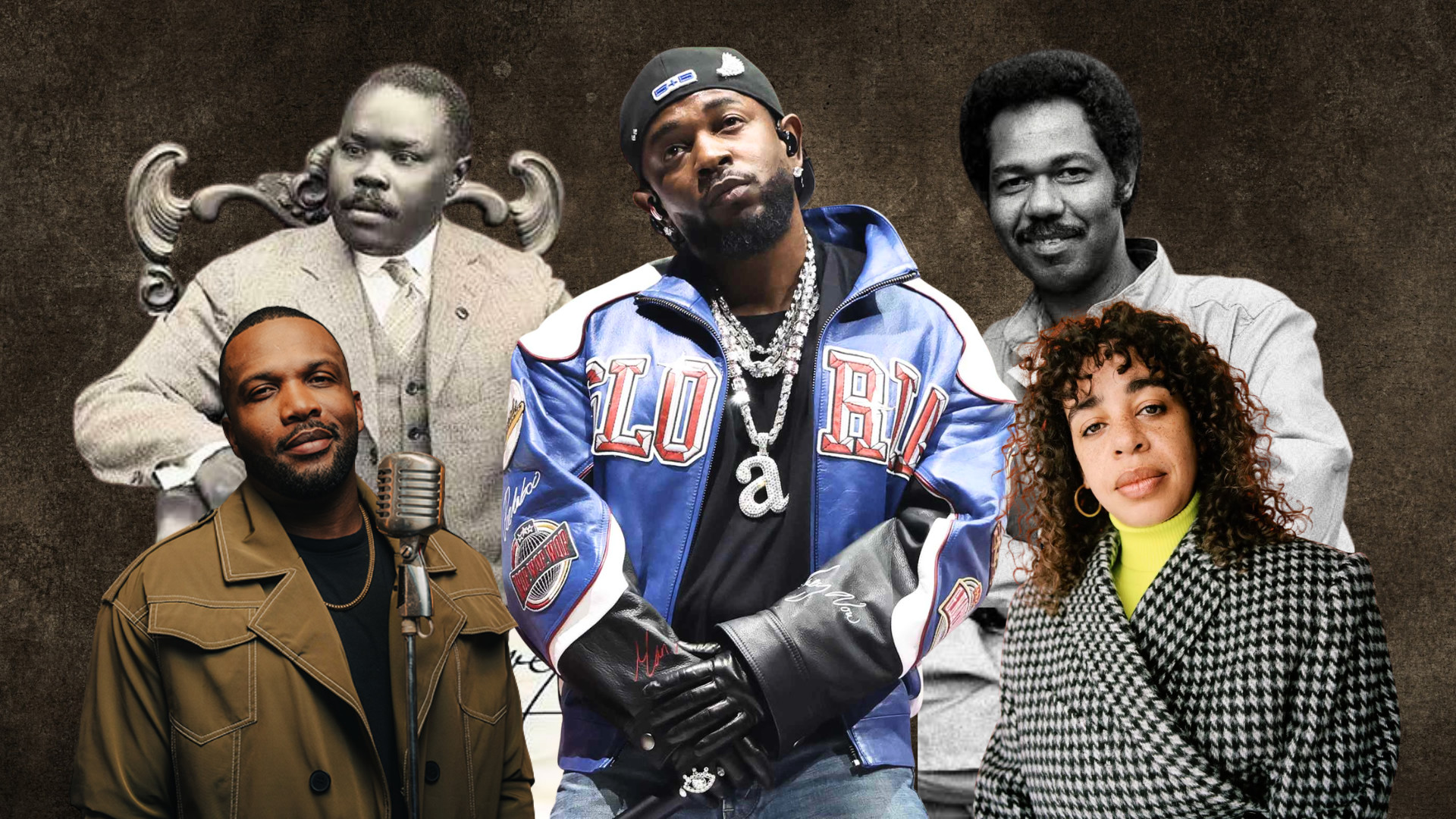
The relationship between Jamaican music and American hip-hop is hardly new. From the genre’s foundations, shaped in part by Jamaican-born DJ Kool Herc, to decades of reggae and dancehall samples, collaborations and shared cultural influences, the two musical traditions have long been intertwined. And while that relationship has evolved over the years, the connections continue to emerge in interesting ways.
Kendrick Lamar, one of the most influential figures in contemporary hip-hop, offers a particularly interesting example. His music is deeply rooted in his experiences as a Black American, yet within his artistic expression are connections to Jamaican music, culture and ideas about Black identity. Some are immediately recognisable through the Jamaican artists and creatives he has worked with, while others emerge through the historical figures and cultural philosophies referenced in his work.
One of those connections has recently found a new audience. “The Blacker the Berry”, Kendrick’s powerful 2015 collaboration with Jamaican dancehall artiste Agent Sasco, has been featured in the Netflix animated series Bass X Machina. Originally released on his critically acclaimed album To Pimp a Butterfly, the song is one of several examples of Jamaican creative contributions to Kendrick’s work.
It’s an opportunity to revisit those connections, from the Jamaican voices heard in his music to the fashion designers and historical figures whose work and ideas intersect with his own, and consider how Jamaican culture continues to find expression within the wider Black creative experience.
Agent Sasco : A Jamaican Perspective on “The Blacker the Berry”
Released in 2015 on To Pimp a Butterfly, “The Blacker the Berry” confronts racism, racial identity and contradictions within Black communities. Its chorus features Jamaican dancehall artiste Agent Sasco, also known as Assassin.
The collaboration came about through two Canadian hip-hop figures with Jamaican roots. The song’s producer, Jamaican-born Canadian Matthew “Boi-1da” Samuels, contacted Canadian-Jamaican rapper Kardinal Offishall, who recommended Sasco for the track.
Sasco recorded his contribution in Jamaica. In a 2015 interview with The FADER, he discussed bringing his Jamaican perspective to the song and delivering his message in patois while making it accessible to an international audience.
The chorus references slavery, chains and whips, contrasting that history with contemporary expressions of wealth and success. It also invokes humanity’s African origins, connecting the Jamaican contribution to the song’s wider examination of race and identity.
Although they collaborated on the recording, Sasco and Kendrick did not meet in person until Kendrick visited Jamaica in 2016.
That year, Kendrick performed “The Blacker the Berry” and “Alright” in a politically charged medley at the Grammy Awards, opening with imagery of imprisonment before transitioning to an African-inspired stage. To Pimp a Butterfly won Best Rap Album that night.
More than a decade after its release, the song has found another audience through its appearance in the Netflix animated series Bass X Machina.
Boris Gardiner: The Enduring Message Behind “Every Nigger Is a Star”
Another Jamaican voice appears at the very beginning of To Pimp a Butterfly.
The album’s opening track, “Wesley’s Theory”, samples “Every Nigger Is a Star”, a 1973 recording by Jamaican singer and musician Boris Gardiner.
Originally recorded for the Jamaican film of the same name, the song was an affirmation of Black pride and self-worth. Its provocative title was deliberate.
In a 2009 interview with The Gleaner, Gardiner described his intention as “turning around the word ‘nigger’ to make it more positive.”
More than four decades later, Kendrick used the recording to introduce an album concerned with Black identity, exploitation, fame and the pressures of success.
The sample creates a thematic connection between Gardiner’s message of Black pride and the questions Kendrick examines throughout To Pimp a Butterfly.
Gardiner approved the use of his recording and welcomed the renewed attention.
“It’s a great feeling to know that somebody realised the song is a powerful song,” he told the Jamaica Observer in 2023.
Martine Rose: Dressing Kendrick Lamar’s Biggest Moments
Martine Rose: Kendrick Lamar’s Creative Connection Through Fashion
British-Jamaican fashion designer Martine Rose has become a recurring presence in Kendrick Lamar’s most high-profile appearances, from his Grammy wins to his Super Bowl halftime performance.
Their partnership began in 2022, when Rose designed looks for his Big Steppers tour. Kendrick described working with her as a bucket-list ambition, sharing images of their designs on Instagram.
The admiration was mutual.
“I think we understand each other on a creative level,” Rose told British Vogue in 2023. “His work is rooted in people’s experience and that’s the way I approach collections, too. It’s fragments of things that feel real.”
Raised in a Jamaican household in London, Rose draws on her cultural upbringing, working-class communities and British subcultures in her designs.
“I grew up in a Jamaican household and style is way above fashion,” she told ELLE UK in 2024.
Her Jamaican heritage also finds an interesting connection through her work as guest creative director of Clarks, a footwear brand with longstanding cultural significance in Jamaica, particularly in dancehall.
Kendrick has repeatedly turned to Rose for major career moments. He wore her designs while accepting the Best Rap Album Grammy for Mr. Morale & the Big Steppers in 2023. Their collaboration extended to merchandise for “The Hillbillies”, and several of his outfits in the 2024 “Not Like Us” music video featured her designs.
In 2025, he wore Martine Rose shoes while accepting Grammy awards for “Not Like Us”, and a custom blue leather jacket by the designer during his Super Bowl halftime performance.
Through these collaborations, Rose’s work has become a recognisable part of Kendrick’s visual identity, extending the cultural expression found in his music into fashion.
Marcus Garvey: The Ideological Connection
Jamaican influence can also be traced through the historical figures and ideas referenced in Kendrick’s music.
As early as 2011, Kendrick referenced Jamaican National Hero Marcus Garvey in “HiiiPoWeR”, a track from his debut studio album, Section.80. In the song, he raps about “racin’ with Marcus Garvey” on the “freeway to Africa”, invoking the Jamaican Pan-Africanist’s Back-to-Africa movement.
In a 2011 interview with Complex, Kendrick explained that his mentor, Punch, had introduced him to the histories of Garvey, Malcolm X and Martin Luther King Jr. while he was developing the song.
Four years later, Garvey appeared again on To Pimp a Butterfly. In the third verse of “The Blacker the Berry”, the same song featuring Agent Sasco, Kendrick references Garvey alongside the Black Panther Party and Black History Month, declaring, “Marcus Garvey got all the answers.”
Garvey was a leading figure in the international Pan-Africanist movement. His advocacy of Black pride, self-determination, economic independence and African unity influenced political and cultural movements across the African diaspora, including Rastafari and Jamaican roots reggae.
The connection to Garvey’s Pan-African legacy also appears visually in Kendrick’s 2024 “Squabble Up” music video, which features David Hammons’ African-American flag, incorporating the red, black and green colours associated with Garvey’s movement.
That Kendrick was referencing Garvey from his first album makes the connection particularly interesting. It places the Jamaican Pan-Africanist among the historical figures informing Kendrick’s exploration of Black identity from the early stages of his recording career, a theme that would remain prominent in his later work.
A Kindred Spirit
What makes these connections particularly interesting is how they converge on To Pimp a Butterfly, Kendrick Lamar’s most critically acclaimed album. From Boris Gardiner’s recording opening the album to Agent Sasco’s contribution to “The Blacker the Berry” and Kendrick’s reference to Marcus Garvey in the same song, Jamaican voices and ideas are woven into a work widely celebrated for its examination of Black identity and racial consciousness.
These creative and ideological connections also speak to the experiences and ideas that inform the work of one of hip-hop’s most influential artists. Kendrick is celebrated for his authenticity and willingness to confront Black identity in all its complexities, celebrating its strengths while examining its contradictions and challenging injustices both within and beyond the Black community.
In this, he shares a kindred spirit with Jamaica’s reggae tradition, whose artists have long used music to examine Black identity, challenge oppressive power structures and advocate for the marginalised. It is another connection that goes beyond individual collaborations, reflecting a shared tradition of using music and fashion as a vehicle for cultural expression, social commentary and change.