The Paris Games are fast approaching, and the centuries-old rivalry between Jamaica and the USA is on full display across social media. The seeming media bias and exaggerated pronouncements hyping USA track and field athletes like Noah Lyles and Sha’carri Richardson, clear favourites to medal, have raised the ire of Jamaicans. In our three-part David vs. Goliath series, we look at the history of this intense rivalry and how Jamaican athletes stole the spotlight from the USA and became the ones to watch at every major global athletic event.
The truth is that Jamaica cannot really challenge the USA when it comes to total medals won at the Olympics or World Championships. However, track and field has emerged as the most exciting and anticipated segment within these global games, resulting in a battle royal for dominance and bragging rights. In Part I, we look at the pioneers who, one race at a time, laid the groundwork for Jamaica’s eventual and undeniable dominance on the tracks.
Arthur Wint delivers Jamaica’s First Olympic upset (1948)
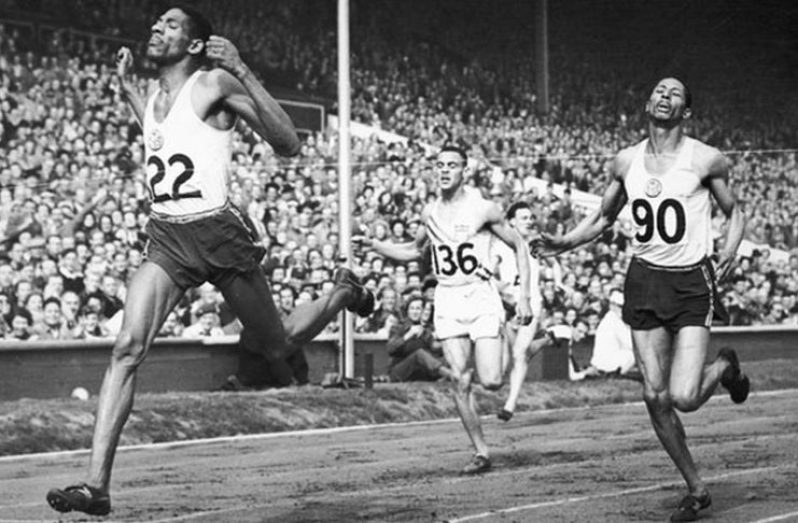
It was in 1948 that a young Arthur Wint dared to win a gold medal in the 400 metres at the London Olympiad, Jamaica’s first Olympic victory. In that race was another elite Jamaican sprinter, Herb McKenley, the world record holder at the time and the prohibitive favourite, who came in second for a Jamaican quinella. Arthur Wint would go on to place second in the 800 metres. These are events that were considered the preserve of the USA, and this little dot on the map was beginning to get rather pesky. Herb McKenley’s challenges in the 100 metres and 200 metres only served to enhance the daring of this nation of just over 1.4 million at the time.
The threat of Jamaica in the 4×400-metre relay could have been the proverbial “straw that broke the camel’s back.” Unfortunately, Arthur Wint pulled up, and the USA cruised to an easy victory in what has become the closing event for most track and field meets. That year, Jamaica tied with Finland for 8th place on the track and field medal table, a sign of things to come.
Jamaica slowly applying pressure (1952)
Jamaica outdid previous efforts at the 1952 Olympic Games with a grand total of five medals—two gold and three silver—to land further up the medal pole at 5th position. This was way ahead of Germany, for example, with its 24 medals but no gold. Jamaica again took a quinella in the 400 metres, with George Rhoden catching the perennial Herb McKenley. But this was after McKenley was challenged by an as yet untested Lindy Remigino of the USA, finishing second in a controversial photo finish.
Even Remigino insisted McKenley won, and to his dying day, McKenley insisted he did win the race. Remigio and McKenley sought to settle the debate once and for all when, as two elder statesmen in the 1970s, they engaged in a run-off at the Jamaica National Stadium that ended exactly as the original race.
Things got more interesting when it came to the 4×400-metre relay. The same four runners from 1948. Arthur Wint, Leslie Laing, Herb McKenley, and George Rhoden, in that order, again challenged the might of the USA. The USA team led significantly at the beginning of the third leg, but Herb McKenley cemented his name in the history books forever with a jaw-dropping comeback for the ages. He gradually nibbled away at the USA lead and handed it over to Rhoden with a slight lead. Rhoden was now up against USA 400m finalist Mal Whitfield. The lead remained the same to the end, with David Jamaica toppling Goliath USA.
Many do not recall that Arthur Wint repeated his silver medal performance in the 800 metres, a monumental achievement.
A temporary cease-fire (1956-60)
Jamaica was not much of a force to be reckoned with in the 1956 Games, and in 1960 the team competed as part of a regional outfit as the idea of Regional Federation contemplations brought English-speaking countries of the Caribbean to a point of unity. A British West Indies team represented the region. With the defeat of the concept of Federation in 1961, Jamaica was back on its own in 1964.
The Momentum Builds (1964)
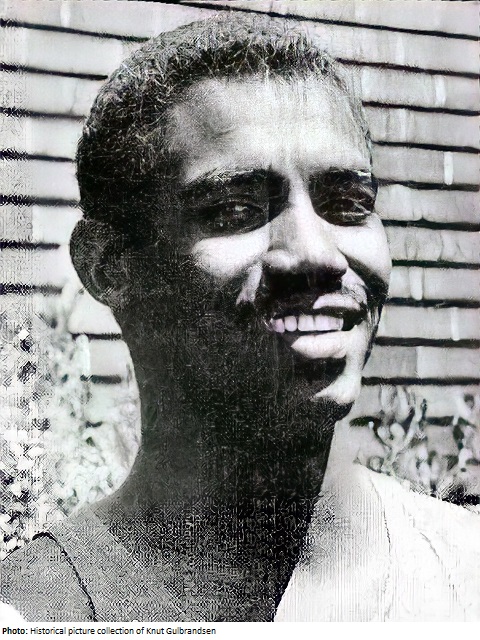
Jamaica did not win a medal in these games, but they did leave their mark in the sprints. A search among the top thirty (30) 100-metre sprinters in that year will reveal Pablo McNeil, Lynn Headley (son of cricket legend George Headley), and Dennis Johnson. McNeil and Headley made it to the semi-finals of the 100m, but Johnson was not in the best form and did not make it past the quarterfinals. In those days, each athlete was required to do four rounds of races in order to be able to win.
In spite of not having a finalist in the 100-metre final, the Jamaicans had the audacity to believe they could win the 4×100-metre relay. They were not far off, finishing fourth. So pumped up was Dennis Johnson on the anchor leg that Headley had to call to him to wait on the baton as he had taken off like a man possessed. This lost them some momentum and would have affected their chances. Bob Hayes, the 100-metre champion and regarded as the fastest man alive, was on the last leg, and Johnson was ready to challenge that rating in the relay.
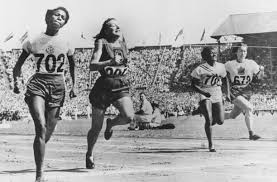
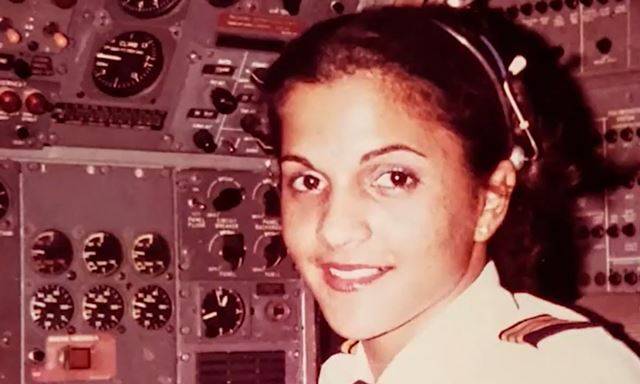
Our ladies, who had started to display their strength in other non-Olympic events, led by the likes of Dr. Cynthia Thompson, Jamaica’s first female Olympian, That year, the women landed a 4th place finish in the 200m in the person of sixteen-year-old Una Morris. Jamaica managed another 4th place finish in the men’s 800m with George Kerr, maintaining the pace set by Arthur Wint.
All this time, the Americans kept up their dominance across athletic events, particularly sprints.
A sign of things to come (1968-72)
Names like Lennox Miller, Michael Fray, Clifton Forbes, and Errol Stewart left their marks on the Games held in Mexico City. Lennox Miller split the famed pair of Jim Hines and Charlie Green of the USA, grabbing the silver medal in the 100 m. In the 4x100m relay, the Jamaicans set a world record in the heats but could not repeat the feat in the final as the USA broke the record set by Jamaica, who finished fourth. Errol Stewart was still a schoolboy when he started the relay. Another schoolboy was kept out of the mix by injury, as the famous Donald Quarrie had qualified for the games.
Michael Fray was a force to contend with as he made it to the final of the 200m, finishing 7th. This was the famous
In 1972, Donald Quarrie became more of a force to be reckoned with, though he again suffered an injury at the Games. It was left for Lennox Miller to repeat his medal feat, finishing third and becoming the first man to medal in successive sprints at the Olympics, running with an injury. With just a bronze medal, Jamaica finished 20th.
The now-legendary sprinter Donald Quarrie finally got a break from his injuries at the 1976 Montreal Games. A silver medal in the 100m started things off, and then Jamaica’s first gold was delivered in his pet event, the 200m. By this time, the battle with the USA had gone beyond the Olympics. For example, Jamaica staged a track and field meet named after former Premier the Right, the Excellent Norman Manley. This star-studded event attracted elite athletes from around the world. One of the emerging stars at the time was Steve Williams, a 100/200m sprinter who had epic battles with Donald Quarrie. Quarrie’s medals placed Jamaica in 9th place.
Donald Quarrie’s big break (1976)
The now-legendary sprinter Donald Quarrie finally got a break from his injuries at the 1976 Montreal Games. A silver medal in the 100m started things off, and then Jamaica’s first gold was delivered in his pet event, the 200m. By this time, the battle with the USA had gone beyond the Olympics.
For example, Jamaica staged a track and field meet named after former Premier the Right, the Excellent Norman Manley. This star-studded event attracted elite athletes from around the world. One of the emerging stars at the time was Steve Williams, a 100/200m sprinter who had epic battles with Donald Quarrie. Quarrie’s medals placed Jamaica in 9th place.
By the 1980s, the World Championship had emerged as a track and field athletic epic where the best in the world would match strides outside of the Olympics. The first staging saw the brilliant Bert Cameron win the 400 m, defeating some of America’s best in the form of Michael Franks and Sunder Nix.
Prominence at the World Championships (1976-88)
By the 1980s the World Championship emerged as a Track & Field athletic epic, where the best in the world would match strides outside of the Olympics. The first staging saw the brilliant Bert Cameron winning the 400m, defeating some of America’s best in the forms of Michael Franks and Sunder Nix.
Since 1976, international politics have started impacting the Olympics. Some countries did not participate due to matters related to apartheid in South Africa. In 1980, the Americans boycotted Afghanistan due to the Soviet invasion, and in 1984, the Soviets returned the favour.
Jamaica was not a part of any of these boycotts, and while the medals were not flowing, the little Tallawah continued to be uppity in its challenge to the world, but particularly the USA.
1980 also saw the emergence of a new squadron in the Jamaican army. Merlene Ottey was becoming a formidable force as the first female Olympic medalist and was to become a fixture at the highest level of world athletics until the turn of the century. Jamaica ended the 1980 Olympics with three bronze medals, compliments of Donald Quarrie, Ottey, and our only other medal outside of athletics, David Weller in cycling. Jamaica finished 15th that year.
By 1984, Carl Lewis had been effectively crowned King of Sprinting in the male category. However, Jamaica had its own queen, as Ottey took bronze in both the 100m and 200m, with Grace Jackson also making both finals and, in fact, finishing 5th in both. Raymond Stewart made the final of the male 100 m, finishing 6th.
While the records show no podium finish for Jamaica in the 400m, there was a major battle between the two protagonists. Recall that Bert Cameron had won the 400 m at the 1983 World Championships and was a major factor at the Olympics. After much banter, mainly from Antonio McKay of the USA in the lead-up to the semifinal, Cameron seemed to pull up on the back straight.
Amazingly, he resumed running and miraculously managed to qualify, coming in 4th. As it turned out, too much damage had been done, and Cameron was not able to face the starter in the final. The Americans prevailed, finishing 1st and 3rd through Babers and McKay, respectively, and so “A Luta Continua.”
The stage was now set for a World Championship in 1987, followed by the Olympics in 1988. In 1987, Raymond Stewart carried the Jamaican banner well, winning a silver medal in the 100m as Carl Lewis maintained his dominance. In the female equivalent, Merlene Ottey continued to carry the flag with another bronze medal, notably finishing ahead of all Americans as the East Germans prevailed.
1988 was a weak year for Jamaica, as only Grace Jackson made the podium at the individual level, finishing 2nd in the 200m. The irrepressible Merlene Ottey finished fourth. The men managed a silver medal in the 4x400m relay.
By 1991, Hurdler Winthrop Graham had begun to emerge from the shadows in another high-profile event. Graham’s assisted silver medal win in the relays set the stage for a time to come when little Jamaica would be able to put it all together.
Merlene the mercurial matriarch (1991-95)
It was in 1991 that the then-International Amateur Athletic Federation (IAAF) decided to move the World Championship to a biennial affair.
That year in Tokyo, the mercurial Merlene Ottey took bronze in both the 100m and 200m and then led Juliet Cuthbert, Dahlia Duhaney, and Bev McDonald to a scintillating gold in the 4x100m. So the pesky little Jamaica finished 8th on the medal table. Behind them were numerous countries with multiples of their 2.5 million populations.
Come 1992, it was an Olympic year, and our ladies had started to gather momentum. It was no longer just Merlene, as had been indicated by Grace Jackson in 1988. Graham continued his stalwart performance with another silver medal in the 400m hurdles, and Juliet Cuthbert broke out of Ottey’s shadow with silver medals in both the 100m and 200m.
he Matriarch Ottey could not be left out, as she took bronze in the 200 m. The absence of a gold medal saw Jamaica drop to 19th on the medal table. Interestingly, a Jamaican named Sandra Farmer-Patrick took silver in the women’s 400-metre hurdles, competing for the USA.
1993 would prove to be the breakout year for the great Merlene Ottey. Her first individual gold medal would come in a major championship as she took home the 200 m. She missed the double by a whisker as she won silver in the 100m, finishing in the same time as American Gwen Torrence.
Bronze medals for Sandie Richards in the 400m and the women in the 4x100m relay should have served as a warning to the USA that the Jamaicans were launching another offensive on their territory. Merlene’s gold made sure that we jumped to 10th in the medal rankings. There would be another World Championship before the next Olympics, and the stage was set for a battle royal.
In 1995, Gregory Haughton kept Jamaica in the “pickle” with a bronze medal in the 400m. Ottey was back with gold in the 200m and silver in the 100m, with no disputes this time. Any suggestion that there was a disqualification in the 200m does not in any way diminish the authenticity of the gold medal. Jamaica was literally beginning to spread its wings.
James Beckford mined silver in the long jump, and Haughton, Davian Clarke, Michael McDonald, and Danny McFarlane presented silver in the 4x400m, all resulting in Jamaica finishing in 12th place on the medal table.
Jamaica’s watershed year (1996-00)
The 1996 Olympics was a watershed year as Jamaica mined its first female gold medal via Deon Hemmings in the 400m hurdles, setting a new Olympic record. The men mined bronze in the 4x400m, and James Beckford repeated his silver medal-winning performance, this time in the Olympics. Ottey continued her sterling performances and historic achievements with silver medals in both the 100m and 200m. Ottey remains convinced that she won the 100 m. A bronze medal in the 4x100m in the female sprint relay pushed Jamaica into 8th position on the medal table.
Jamaica’s failure to win a gold medal in 1997 resulted in a fall to 27th on the medal table. There were, nonetheless, some encouraging performances. Deon Hemmings picking up silver in the 400-metre hurdles and Sandie Richards also winning silver kept up the threat on our more illustrious competitors. Michelle Freeman’s bronze in the 100-metre hurdles continued to indicate a broader base of competitiveness. The men mined silver in the 4x400m at a time that would embarrass the recent efforts to qualify for the 4x400m relays in Paris. It was 2:56.75.
Ottey gave us another bronze in the 200m, and the ladies gave us silver in the sprint relay and bronze in the 4x400m relay. The trend was developing whereby Jamaica was consistently winning six or more medals.
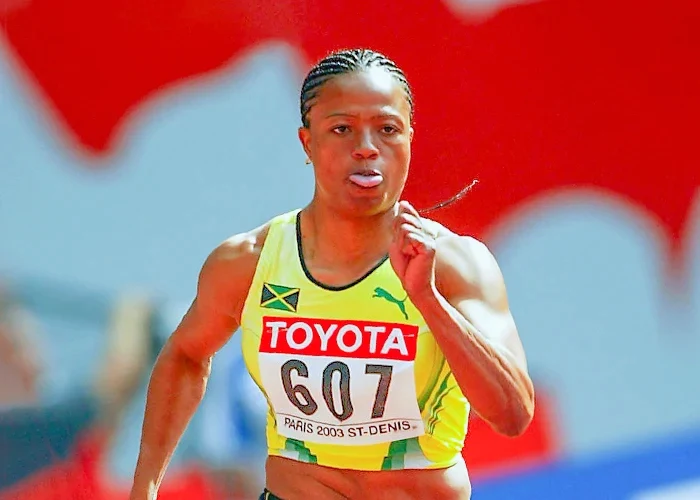
In 1999, another six were achieved, with Lorraine Fenton winning bronze in the 400m, Bev McDonald winning silver in the 200m, and Merlene Frazer tied for third, thus earning a bronze. The men mined silver in the 4x400m, Deon Hemmings gave us another bronze in the 400m hurdles, and the ladies gave us a bronze in the 4x100m relay. Jamaica slipped to 23 on the medal table due to the absence of a gold medal.
2000 arrived, and Jamaica mined nine medals but no gold. Gregory Haughton got bronze in the 400m, the 4x400m for the men team got silver, Ottey contributed yet another bronze in the 100m, and McDonald got bronze in the 200m. Lorraine Graham picked up a silver in the 400m; the venerable Deon Hemmings got silver in the 400m hurdles; and so did the ladies in the 4x100m and 4x400m relays.
The new vanguards and the lucky number 6 (2000-05)
The six-medal consistency continued into the World Championships of 2001. This time Jamaica managed gold in the women’s 4x400m, Lorraine Fenton won silver in the 400m, so did the men in the 4x400m, and Christopher Williams did too in the 200m. Haughton again gave us bronze in the 400m, and the ladies mined bronze in the sprint relay. So with a gold medal, Jamaica again jumped up the table to 14th.
In 2003, Jamaica maintained the six medals achievement but won no gold, so they dropped to 24th on the table. Such is the weight of gold. Lorraine Fenton, Brigitte Foster, James Beckford, and the men’s 4x400m team all won silver, while the women’s 4x400m relay team and Michael Blackwood in the 400m won bronze.
While the haul went down numerically to five in the 2004 Olympics, with two gold medals, Jamaica was again in the top ten, finishing in 7th place. Veronica Campbell in the 200m and the ladies sprint relay team won gold. Danny McFarlane won silver in the 400m hurdles; Campbell also won bronze in the 100m; and the ladies again won bronze in the 4x400m relay.
Eight medals, including a gold from Trecia Kaye Smith in the triple jump, kept Jamaica in the top ten at 8th position in the 2005 World Championships. Michael Frater in the 100m, Veronica Campbell in the 100m, Delloreen Ennis-London in the 100m hurdles, and the women in both the sprint and 4x400m relays earned themselves and Jamaica silver medals, while the male 4x400m relay team and Brigitte Foster in the 100m hurdles mined bronze.
Lightning about to strike
There was development in the men’s 200m that was like an omen for all. Good for some and frightening for others, one Usain Bolt competed and finished last. To this day, many are not aware that he was injured from as far out as 150 metres, but he soldiered home. He would be a thorn in the sides of all male sprinters for the next twelve years.
In Part II, David vs. Goliath: The Golden Era of Bolt, we delve into the reign of Asafa Powell, the sub-10 king, Usain Bolt’s record-breaking achievements and G.O.A.T. status, the incredible winning streak of the Pocket Rocket Shelly-Ann Fraser-Pryce and the Rise of Fast Elaine Thompson-Herah.